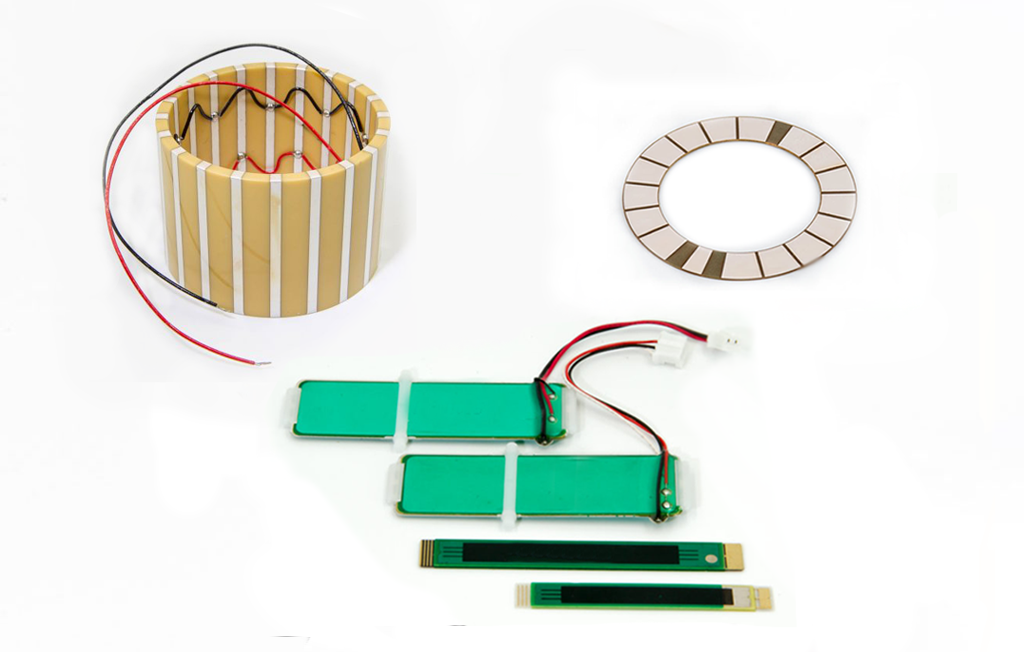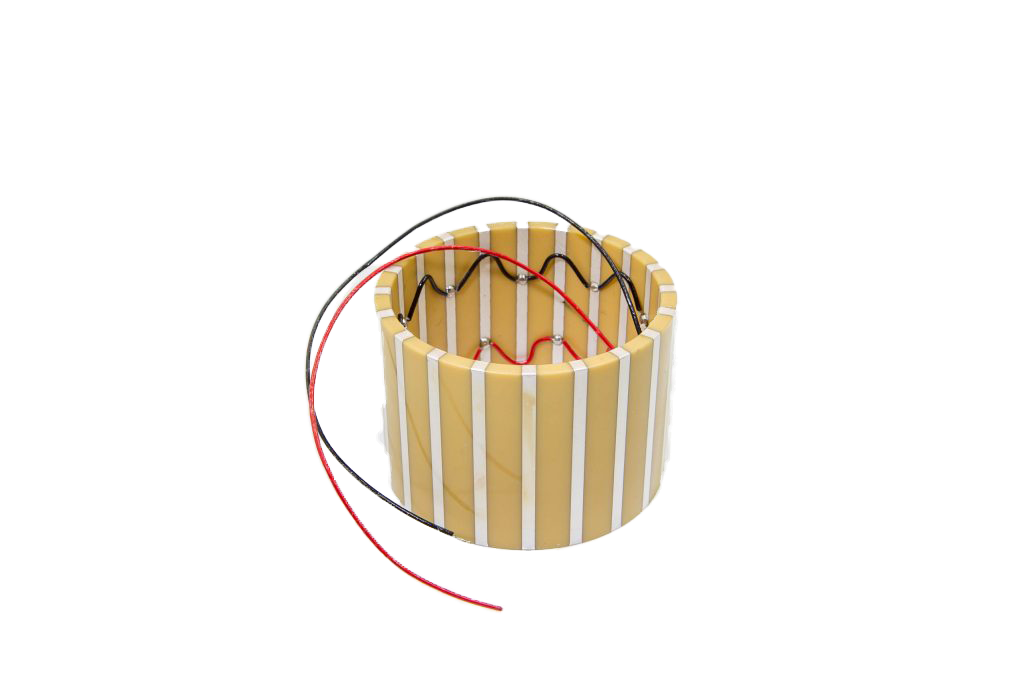
PZT discs are more than just interesting lab materials; they’re actually pretty common in factories and businesses. Their main trick is changing mechanical stress into electrical signals, and the other way around too. This makes them handy for a bunch of jobs. Let’s check out a few.
Ignition Systems and Gas Lighters
Ever wonder how those gas lighters spark up without batteries? That’s PZT at work! A quick press creates a jolt of electricity, enough to ignite the gas. These discs are reliable and last a long time, making them a good choice for:
- BBQ lighters
- Gas stoves
- Welding torches
Sound Generation and Transducers
Piezoelectric discs are also great at making and detecting sound. You’ll find them in all sorts of audio gear. They vibrate to create sound waves, like in speakers, or they vibrate when sound hits them, creating an electrical signal, like in microphones. They’re also used in ultrasonic cleaners to zap dirt off delicate parts with high-frequency sound.
PZT transducers are also used in sonar systems to send and receive sound waves underwater. This is useful for mapping the ocean floor, finding objects, and even communicating with submarines. The versatility of PZT in sound applications is pretty impressive.
Non-Destructive Testing
This is where PZT discs really show their worth. Non-destructive testing (NDT) means checking for flaws without actually breaking the item. PZT discs can send ultrasonic waves into materials. By listening to how those waves bounce back, you can find cracks or other hidden problems. This is super useful for inspecting welds on pipelines or checking aircraft parts for any issues.
Here’s a quick look at how PZT helps in NDT:
| Application | What’s Checked | How PZT Helps |
| Weld Inspection | Cracks, voids | Sends/receives ultrasonic waves to detect flaws |
| Aircraft Part Inspection | Internal defects | Analyzes wave reflections for anomalies |
| Concrete Structure Testing | Cracks, damage | Detects internal structural weaknesses |
PZT Discs in Advanced Sensing Technologies
PZT discs are really something else when it comes to sensing. They have this neat trick of turning physical stuff – like pressure or vibrations – into electrical signals. And the cool part? It works the other way around too. This makes them super handy for all sorts of sensors where you need to be both sensitive and accurate. Imagine being able to detect tiny changes in pressure and have that turn into a readable signal. It’s pretty neat.
Precision Acoustic Sensing with PZT
PZT discs are often found in microphones and underwater sensors because they’re good at picking up sound waves. When sound hits the disc, it vibrates, and that vibration creates an electrical signal. You can actually change the size and shape of the disc to make it better at picking up certain sound frequencies. This is a big deal for things like sonar, where you need to hear specific sounds from really far away. Plus, PZT sensors can be made pretty small, which is great for devices that need to be compact. Think about medical ultrasound devices; they use arrays of tiny PZT elements to get detailed pictures inside the body. These sensors are key for getting high-resolution images.
Pressure and Force Measurement Applications
Need to measure pressure or force? PZT discs can handle that too! When you push on a PZT disc, it creates an electrical charge that’s directly related to how hard you pushed. This is used in a few different places:
- High-precision scales: These use PZT sensors to get accurate weight readings.
- Automotive sensors: Systems that monitor tire pressure use PZT sensors to keep track of it in real-time.
- Industrial monitoring: Checking pressure in pipelines or hydraulic systems.
The sensitivity of PZT sensors to pressure changes makes them ideal for applications where even small variations need to be detected. This is particularly important in fields like aerospace, where precise measurements are critical for safety and performance.
Vibration Detection and Analysis
PZT discs are also great for detecting and analyzing vibrations. Because they react quickly to mechanical stress, they can pick up even subtle shakes. This is useful in:
- Structural health monitoring: Attaching PZT sensors to bridges or buildings to spot early signs of damage.
- Machine condition monitoring: Keeping an eye on vibrations in machinery to guess when maintenance might be needed.
- Seismic sensors: Detecting and measuring ground vibrations from earthquakes.
Here’s a quick look at how PZT sensors are used in vibration analysis:
| Application | Vibration Type | PZT Sensor Output | Analysis Goal |
| Machine Condition Monitoring | High-frequency | Voltage signal | Detect bearing faults, imbalance, misalignment |
| Structural Health Monitoring | Low-frequency | Voltage signal | Detect cracks, corrosion, structural weakness |
| Seismic Monitoring | Very low frequency | Voltage signal | Measure earthquake magnitude and location |
Using PZT technology in these areas can help catch potential problems early, saving time and money down the road.
Actuation Capabilities of the PZT Disc
PZT discs aren’t just for sensing; they’re also pretty good at doing stuff. Their ability to convert electrical energy into mechanical motion makes them useful in a bunch of applications where you need precise and controlled movement. It’s all thanks to the inverse piezoelectric effect, where applying voltage causes the material to deform. Let’s look at some examples.
Generating Precise Mechanical Motion
At its core, a PZT disc can generate very small but precise movements. When you apply a voltage, the disc expands or contracts. The amount of movement is proportional to the applied voltage. This makes them ideal for applications where accuracy is key. Think about positioning something with extreme precision – that’s where PZT actuators shine. The amount of displacement can be controlled with high resolution, often down to the nanometer scale. This level of control is hard to achieve with traditional mechanical systems.
Micro-Positioning Systems
Micro-positioning systems are a prime example of PZT actuation in action. These systems are used in a variety of fields, from semiconductor manufacturing to scientific instrumentation. Imagine needing to move a tiny sample under a microscope with incredible accuracy. PZT actuators can do that. They’re often used in stages that move in X, Y, and Z directions, allowing for three-dimensional positioning. The fast response time of PZT materials also means these systems can operate at high speeds. Piezo actuators are really useful in these situations.
Fluid Control and Atomization
Another interesting application is in fluid control and atomization. PZT discs can be used to create tiny pumps or valves that control the flow of liquids with great precision. In ink jet printers, for example, PZT actuators are used to eject tiny droplets of ink onto the paper. They can also be used in medical devices to deliver precise doses of medication. In atomization, the rapid vibration of a PZT disc can break a liquid into a fine mist. This is used in humidifiers, nebulizers, and fuel injectors. The frequency and amplitude of the vibration can be tuned to control the size of the droplets produced.
PZT discs offer a unique combination of precision, speed, and compactness, making them a great choice for applications requiring controlled mechanical motion. While challenges exist in terms of durability and environmental impact, ongoing research is expanding their capabilities and addressing these concerns.
PZT Discs in Medical and Healthcare Devices
PZT discs have really made a splash in the medical field, and it’s easy to see why. Their ability to convert electrical energy into mechanical motion, and vice versa, opens up a ton of possibilities for both diagnostics and treatment. From getting a clearer picture inside the body to delivering drugs more effectively, PZT discs are changing the game.
Ultrasound Imaging and Diagnostics
PZT discs are a cornerstone of modern ultrasound technology. These tiny ceramic components act as both the transmitter and receiver of sound waves. When an electrical pulse is applied, the PZT disc vibrates, sending high-frequency sound waves into the body. These waves bounce off internal tissues and organs, and when they return, they cause the PZT disc to vibrate again. This vibration generates an electrical signal that is then processed to create a visual image. The precision and speed of PZT allow for real-time imaging, which is invaluable for everything from prenatal scans to examining organ health. The ability to tune the PZT disc’s properties means we can create transducers optimized for different depths and resolutions, making them incredibly versatile for various diagnostic needs.

Drug Delivery Systems
Beyond imaging, PZT discs are finding innovative uses in drug delivery. Imagine a device that can dispense medication with extreme accuracy, drop by drop. PZT actuators can be used to create micro-pumps or valves that control the flow of liquids with remarkable precision. This is particularly useful for targeted therapies or for patients who require very specific dosages. Furthermore, the ability of PZT to vibrate at high frequencies can be harnessed for atomization, turning liquid medication into a fine mist for inhalation or other specialized delivery methods. This controlled micro-dispensing capability holds promise for more effective treatments with fewer side effects.
Emerging Trends and Future Prospects for PZT Discs
The world of PZT discs is always changing. New ideas are constantly pushing what these useful parts can do. From new materials to clever uses, the future looks good for PZT tech. Let’s look at some of the exciting things happening.
Development of Lead-Free PZT Alternatives
One of the biggest issues with PZT is the lead in it. Lead is bad for health and the environment, so people are looking for alternatives. Scientists are working hard to create PZT discs that work well but are also safe for the planet. They’re trying out materials like bismuth sodium titanate (BNT) and potassium sodium niobate (KNN). The goal is to find something that works as well as lead-based PZT but without the worries. This is a big deal for industries where rules about pollution are getting tougher.
Miniaturization and Integration
Smaller is often better, especially with today’s electronics. The move towards smaller parts also affects PZT discs. Researchers are figuring out how to make smaller, thinner PZT pieces that can easily fit into tiny devices and systems. This uses advanced ways to make tiny parts and new designs that work best when they’re small. Think about what this means for tiny medical devices or super-small sensors. This push for smaller parts is opening up new ways to use piezoelectric technology.
Here’s a quick look at how things are getting smaller:
- Better ways to make tiny parts
- Development of thin-film PZT
- Easier integration with MEMS (Micro-Electro-Mechanical Systems)
Smart Materials and Adaptive Systems
Imagine materials that can sense what’s around them and react. That’s the idea behind smart materials, and PZT discs are a big part of it. By putting PZT discs together with sensors and control systems, we can make systems that change how they work on the fly. For example, a smart structure could use PZT parts to reduce shaking or change its shape when forces act on it. This opens up cool possibilities in planes, cars, and buildings. The development of smart materials is a real game-changer.
The future of PZT discs is about making them more connected, more eco-friendly, and more responsive. As research goes on and new uses pop up, we can expect PZT technology to play a bigger role in many different industries.
Challenges and Considerations in PZT Disc Implementation
While PZT discs offer a lot of cool capabilities, getting them to work right in the real world isn’t always straightforward. There are a few things you really need to think about. It’s not just about picking a disc; it’s about making sure it can handle the job and that you can actually build it properly. Plus, we can’t forget about the environmental side of things.
Durability and Performance Under Stress
PZT materials are tough, but they aren’t indestructible. Over time, especially with constant pressure, high heat, or strong electrical fields, their performance can drop. This might mean they become less sensitive or can’t push as hard. A few things can mess with how long they last:
- Mechanical stress: This includes being squeezed, pulled, or twisted.
- Electrical stress: Running them with high voltages or constantly switching the power on and off.
- Temperature changes: Big swings in heat and cold.
- Environment: Things like moisture or corrosive chemicals can also be a problem.
It’s really important to think about where the PZT disc will be used when you’re picking one out and designing your system. Using the right mounting methods and maybe even a protective coating can help them last longer and perform better, especially in demanding applications like those found in the industrial spray nozzle sector where consistent performance is key.
Design and Fabrication Complexities
Just sticking a PZT disc into a circuit isn’t the whole story. Because they convert electrical energy to mechanical energy (and vice versa), you have to be smart about how you hook them up. Things like matching their electrical resistance and understanding their natural vibration points are important. Making them can also be tricky, especially if you need specific shapes or very precise sizes.
Some common headaches include:
- Getting the disc to vibrate at the exact frequency you need.
- Dealing with extra electrical signals you don’t want.
- Making sure the material is polarized correctly all the way through.
- Attaching the PZT to other parts without putting stress on it.
Using computer simulations can really help iron out design kinks before you build anything. Precision manufacturing is also a big part of getting reliable results.
Environmental Impact and Sustainability
Here’s a big one: many traditional PZT discs contain lead. Lead is a toxic material, and its use is becoming a bigger concern. This is why a lot of research is going into making PZT discs without lead. While these new lead-free options are showing promise, they sometimes don’t perform quite as well as the old ones, or they have other trade-offs. We need to think about:
- The lead in older PZT types.
- How much energy it takes to make them.
- What happens to them when they’re thrown away or recycled.
Researchers are looking into materials like bismuth-based ceramics and alkali niobates to find replacements that work well but are safer for the environment. This push for greener materials is important for many industries.
Wrapping It Up
So, we’ve taken a good look at PZT discs, and it’s pretty clear they’re not just some niche item. They pop up everywhere, from the simple click of a gas lighter to complex medical imaging. It’s kind of amazing how one small component can do so many different jobs, whether it’s making sound, sensing vibrations, or moving things with real precision. We’ve seen how they’re used in everyday gadgets and in high-tech industrial setups. Honestly, it feels like we’re still figuring out all the cool things PZT discs can do. As technology keeps evolving, you can bet these little discs will be right there, helping to build the next wave of innovations. It’ll be interesting to see where they show up next!
Frequently Asked Questions
What is a PZT disc and how does it work?
A PZT disc is a special type of ceramic material. It has a cool ability: when you apply electricity to it, it changes shape a little bit. And if you squeeze or stretch it, it creates a small electrical charge. This back-and-forth action makes it useful in many different gadgets and machines.
Where are PZT discs used in everyday life?
You can find PZT discs in lots of places! They help make sounds in speakers and microphones. They are also used in medical tools like ultrasound machines to see inside your body, and even in gas lighters to create a spark that starts a flame.
Are PZT discs good for detecting things?
Yes, they are! PZT discs are excellent at sensing tiny changes. They can detect small shifts in pressure or even slight vibrations. This makes them perfect for tools like earthquake detectors or systems that check if a bridge is shaking.
How do PZT discs help in medical tools?
In healthcare, PZT discs are really important for ultrasound machines, which help doctors see images of things inside the body, like a growing baby. They are also being used in new ways to deliver medicines precisely where they are needed.
Are there any problems or difficulties when using PZT discs?
Sometimes, it can be tricky to use PZT discs. They need to be able to last a long time, even when used a lot or in tough environments. Also, making them very small and fitting them into tiny electronic devices can be a challenge.
Are scientists creating new kinds of PZT discs?
Yes, they are! Researchers are working on making new PZT materials that don’t contain lead, which is better for the environment. They are also trying to make these discs even smaller and smarter so they can do even more amazing things in the future.