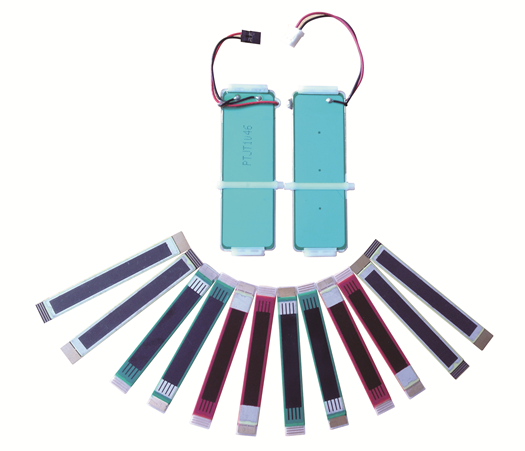
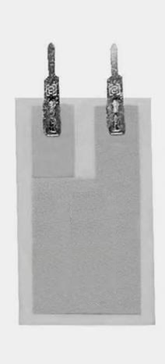
As sensing technology becomes smaller, lighter, and more adaptable, manufacturers increasingly need components that can perform reliably in applications where traditional rigid sensors may not be practical. Piezo Direct manufactures PVDF piezoelectric film sensor solutions designed for applications requiring flexibility, low weight, durability, and sensitive detection of dynamic mechanical changes.
As a U.S.-based manufacturer of custom and standard piezoelectric components, Piezo Direct combines extensive experience in piezoelectric ceramics with expanded capabilities in flexible PVDF film technology. Customers can work with Piezo Direct to develop application-specific sensors or select standard solutions for integration into medical technology, industrial equipment, aerospace systems, consumer electronics, IoT devices, and other advanced products.
What Is a PVDF Piezoelectric Film Sensor?
PVDF, or polyvinylidene fluoride, is a flexible polymer that can exhibit piezoelectric properties after undergoing specialized manufacturing and poling processes. When pressure, vibration, bending, or other dynamic mechanical forces are applied to a PVDF piezoelectric film sensor, the material generates an electrical signal that can be measured and interpreted by an electronic system.
Unlike rigid piezo ceramic components, PVDF film can be manufactured in thin, lightweight configurations that conform to curved, moving, or irregular surfaces. This makes PVDF particularly useful for applications where flexibility and low mass are important design considerations.
PVDF sensors are especially effective for dynamic measurements such as vibration, impact, motion, acoustic signals, and rapidly changing pressure rather than long-term static force measurements.
Benefits of PVDF Piezoelectric Film Sensors
PVDF film provides engineers with a different set of characteristics than conventional PZT ceramic sensors. Depending on the application, these characteristics can make PVDF an effective solution for sensing systems that require flexibility or a very thin profile.
Key benefits can include:
- Lightweight and thin construction
- Mechanical flexibility
- Ability to conform to curved or moving surfaces
- Wide frequency response
- Low acoustic impedance
- Strong fatigue resistance
- Chemical resistance
- Good thermal stability
- Lead-free material composition
- Sensitivity to vibration, pressure, impact, and movement
Because PVDF can be produced in thin-film configurations, engineers can integrate sensing capabilities into products where conventional rigid components would be difficult to accommodate.
Custom PVDF Sensor Manufacturing
One of the primary advantages of working with Piezo Direct is access to custom engineering and manufacturing capabilities.
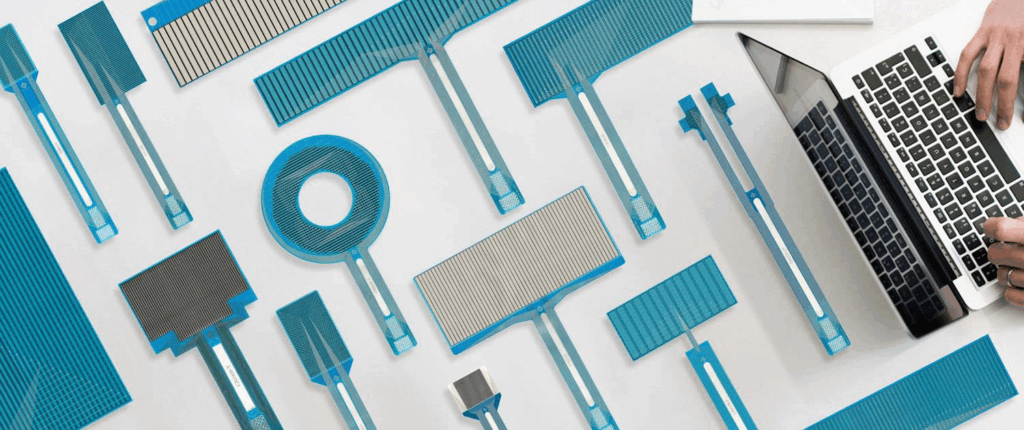
A PVDF piezoelectric film sensor can be customized based on factors such as shape, thickness, electrode configuration, sensitivity requirements, and operating environment. Piezo Direct works with customers to evaluate material selection, electrode patterning, sensor dimensions, and integration requirements so the finished component is appropriate for the intended system.
PVDF manufacturing begins with thin sheets of polyvinylidene fluoride that can be produced through casting or extrusion. The film is metallized to form electrodes and undergoes a poling process that aligns molecular dipoles and establishes its piezoelectric characteristics.
Piezo Direct can support both standard products and custom programs, giving product designers greater flexibility when moving from initial development and prototyping toward larger production requirements.
A U.S.-Based Piezoelectric Manufacturer
Working with a U.S.-based piezoelectric company can provide an important advantage when a project requires technical communication, engineering support, customization, or ongoing product development.
Piezo Direct is based in California and specializes in both standard and custom piezoelectric components. In addition to PVDF film sensors, the company’s product capabilities include piezo sensors, transducers, actuators, discs, tubes, rings, strips, plates, multilayer components, and atomization products.
This broad understanding of piezoelectric technology enables Piezo Direct to help customers evaluate whether flexible PVDF or a traditional piezoceramic component is more appropriate for a particular application.
Experience With Custom and Standard Piezoelectric Components
Piezo Direct has built its reputation by supplying piezoelectric components for demanding commercial and industrial applications. The company works with customers that require both standardized components and highly customized piezoelectric designs.
Reliable performance starts with understanding how material selection, geometry, electrodes, operating frequency, environmental exposure, and mechanical loading interact within the finished product. Piezo Direct’s experience across multiple types of piezoelectric technology allows its engineering team to approach PVDF sensor development as part of the complete application rather than treating the sensor as an isolated component.
For manufacturers developing a new product, this engineering-focused approach can help identify important design considerations early in the development process.
PVDF Sensors for Medical and Wearable Technology
The thin and flexible construction of PVDF makes it particularly well suited to wearable sensing technology.
A PVDF sensor can conform to surfaces and detect dynamic changes in movement, pressure, and vibration without requiring the rigid structure associated with many conventional sensors. Potential applications include wearable motion sensors, pressure sensing systems, gesture detection, diagnostic equipment, and other compact sensing technologies.
Its lead-free composition can also make PVDF attractive for product designers seeking alternatives to conventional lead-containing PZT materials.
Aerospace and Industrial Monitoring
Industrial equipment and aerospace structures frequently require sensors capable of detecting vibration, impact, pressure fluctuations, or changes in structural behavior.
PVDF sensors can be incorporated into structural monitoring systems for applications involving machinery, pipelines, aircraft components, testing equipment, and infrastructure. Flexible films may also be incorporated into pressure-sensing arrays for aerodynamic testing and research.
The combination of low weight and flexibility can be particularly useful when adding sensing capabilities without significantly changing the mechanical characteristics of the structure being monitored.
Energy Harvesting and IoT Applications
PVDF piezoelectric film can also be used in systems designed to convert mechanical movement or vibration into small amounts of electrical energy.
These applications can include piezoelectric energy harvesting devices, self-powered sensing concepts, wireless IoT sensors, and lightweight energy harvesting patches. In appropriate systems, ambient movement or vibration can provide an energy source for low-power electronics or sensing functions.
As connected devices continue to become smaller and more widely distributed, flexible piezoelectric technology offers engineers additional options for incorporating sensing and energy harvesting capabilities into compact systems.
Consumer Electronics and Acoustic Applications
PVDF’s thin construction, flexibility, and response to dynamic mechanical signals also make it suitable for consumer electronics.
Potential applications include flexible microphones, acoustic sensors, haptic interfaces, sound-generating systems, touch-sensitive devices, and other products where space and weight are important considerations.
Because PVDF film can be customized by shape and electrode pattern, engineers can develop sensor configurations around the physical design of the product rather than relying solely on standardized rigid components.
Choosing Between PVDF and PZT
PVDF and PZT are both valuable piezoelectric materials, but they serve different engineering requirements.
Traditional PZT ceramics generally provide very strong piezoelectric performance and are widely used in actuators, ultrasonic transducers, sensors, and precision positioning systems. PVDF offers greater mechanical flexibility, lower weight, and the ability to conform to curved or moving surfaces.
Rather than treating one material as universally better than the other, Piezo Direct can help customers evaluate which technology is more appropriate based on the project’s mechanical, electrical, dimensional, and environmental requirements.
Work With Piezo Direct for Custom PVDF Film Sensors
Selecting the right PVDF piezoelectric film sensor involves more than choosing a film thickness. Sensor geometry, electrode design, sensitivity, operating frequency, environmental exposure, installation method, and electronic integration can all influence performance.
Piezo Direct combines experience with PVDF polymers and established expertise in reliable piezo ceramic products to provide customers with a broad range of sensing options. From standard piezoelectric components to fully customized PVDF sensor designs, Piezo Direct works with manufacturers, engineers, and product developers to create components tailored to the requirements of the finished application.
For additional technical information, interlink the phrase PVDF piezoelectric film sensors to Piezo Direct’s dedicated PVDF product page.
Frequently Asked Questions About PVDF Piezoelectric Film Sensors
1. What is a PVDF piezoelectric film sensor?
A PVDF piezoelectric film sensor is a flexible sensor made from polyvinylidene fluoride that generates an electrical signal when exposed to dynamic mechanical forces such as vibration, bending, pressure, impact, or movement. Its thin and flexible construction makes it useful for applications where rigid piezoelectric components may not be appropriate.
2. What are the advantages of PVDF compared with traditional PZT sensors?
PVDF is lightweight, thin, flexible, lead-free, and capable of conforming to curved or moving surfaces. Traditional PZT ceramics typically provide stronger piezoelectric performance and are well suited to many ultrasonic and precision applications. The appropriate material depends on the specific requirements of the sensing system.
3. Can Piezo Direct manufacture custom PVDF sensors?
Yes. Piezo Direct can customize PVDF film sensors according to characteristics such as shape, thickness, electrode pattern, sensitivity, and application requirements. The company works with customers to develop sensors that can be integrated into specific products and systems.
4. What industries use PVDF piezoelectric film sensors?
PVDF sensors can be used across medical and wearable technology, aerospace, industrial monitoring, consumer electronics, acoustic systems, energy harvesting, IoT devices, research equipment, and structural monitoring applications.
5. Why work with Piezo Direct for PVDF sensors?
Piezo Direct is a U.S.-based manufacturer specializing in both custom and standard piezoelectric components. Its experience with piezo sensors, actuators, transducers, ceramics, and flexible PVDF technology allows customers to work with a single supplier when evaluating different piezoelectric solutions for their applications.