Piezoelectric sensing technology is used across industries to detect vibration, pressure, impact, movement, strain, and other dynamic mechanical changes. For applications requiring sensing across an extended distance rather than at a single point, Piezo Coaxial Cable provides a flexible and durable alternative to conventional discrete piezoelectric sensors.
Piezo Direct is a U.S.-based manufacturer of custom and standard piezoelectric components, including Piezo Coaxial Cable Sensors, piezo ceramic sensors, transducers, actuators, PVDF film sensors, and other specialized piezoelectric products. Based in California, Piezo Direct works with engineers and manufacturers to develop sensing solutions for security, automotive, aerospace, industrial, infrastructure, environmental, acoustic, and other specialized applications.
What Is Piezo Coaxial Cable?
Piezo Coaxial Cable is a flexible, linear piezoelectric sensor designed to generate an electrical signal when mechanical stress is applied along the cable.
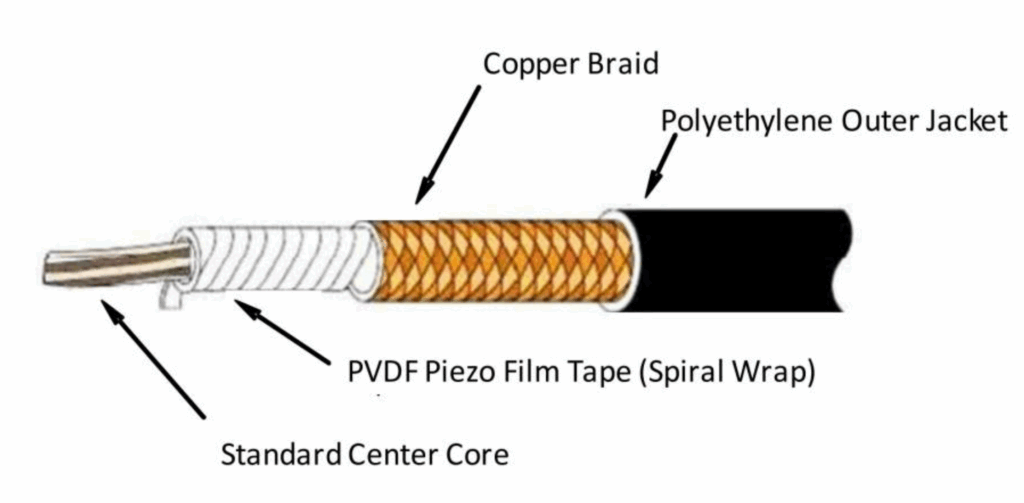
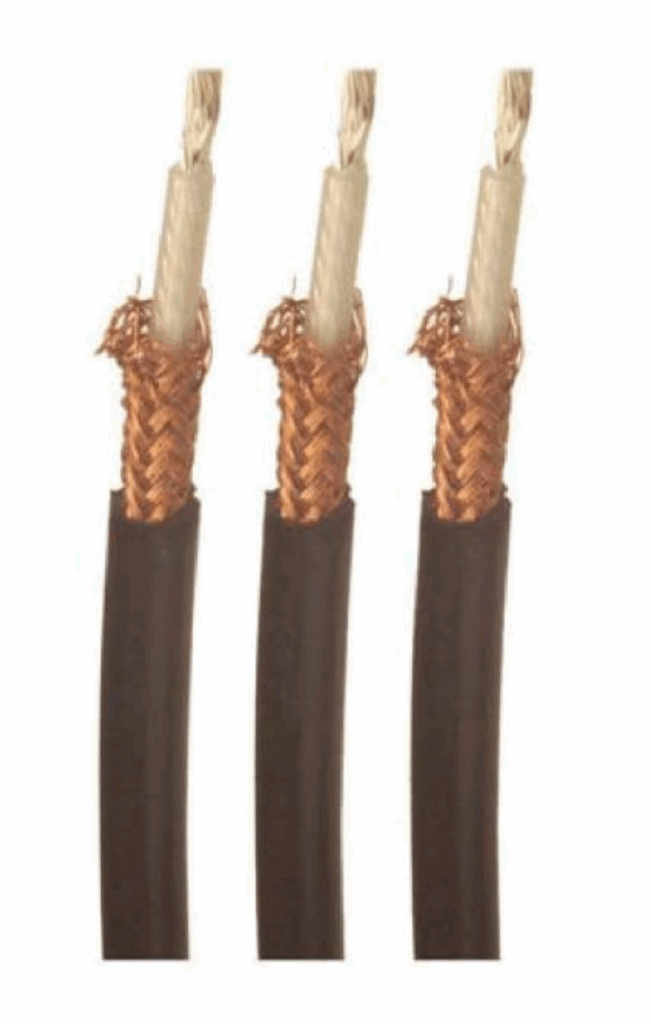
Piezo Direct’s coaxial cable incorporates PVDF piezoelectric material as the dielectric between a stranded silver-plated copper center conductor and an outer shielded braid. When the cable experiences compression, stretching, bending, or vibration, the PVDF material responds to the mechanical change and generates a measurable voltage.
Unlike a piezo disc or other point-based sensor that detects activity within a relatively small area, Piezo Coaxial Cable Sensors can provide continuous sensing along the length of the cable. This makes the technology particularly useful for applications that require monitoring over large areas, long distances, boundaries, structures, or equipment.
How Piezo Coaxial Cable Sensors Work
The sensing capability of piezo coaxial cable comes from the piezoelectric properties of the PVDF material incorporated into its construction.
During manufacturing, narrow PVDF ribbons are helically wound around a stranded silver-plated copper core. The assembly is shielded and braided before receiving a protective high-density polyethylene jacket. The PVDF dielectric also undergoes a poling process that aligns its molecular dipoles and establishes its piezoelectric characteristics.
When mechanical stress changes the polarization of the PVDF material, the resulting electrical charge is collected by the conductors and produces a measurable signal.
Because this sensing action occurs throughout the cable rather than at a single point, one cable can be incorporated into systems designed to detect activity across an extended area.
Benefits of Piezo Coaxial Cable
A Piezo Coaxial Cable combines the advantages of flexible PVDF sensing technology with a rugged coaxial construction.
Important benefits include:
- Continuous linear sensing across extended distances
- Flexible construction for installation around different structures
- Self-shielded coaxial design for environments with electromagnetic interference
- Water-resistant construction
- Resistance to substantial mechanical loads
- Ability to detect vibration, pressure, impact, bending, and tension
- Field-repairable and spliceable construction using conventional coaxial techniques
- High voltage response
- Low impedance per unit length
- Availability in cut lengths or continuous spools
Piezo Direct’s standard cable is designed for temperature stability up to 85 degrees Celsius and can be supplied in short cut lengths or continuous spool configurations depending on installation requirements.
Custom Piezo Coaxial Cable Manufacturing
Not every sensing application requires the same cable construction.
Environmental exposure, required sensing distance, connection method, sensitivity, mechanical loading, installation method, and system electronics can all influence how a piezoelectric cable should be configured.
Piezo Direct manufactures both standard and custom Piezo Coaxial Cable Sensors. Customization options can include cable length, connector and termination styles, shielding, jacket materials, and sensitivity characteristics for specific applications.
This ability to customize the sensor allows engineers to develop the cable around the requirements of the finished system rather than attempting to adapt a generic sensor to a specialized application.
Security and Perimeter Monitoring
One of the advantages of linear piezoelectric sensing is the ability to monitor extended boundaries.
Piezo coaxial cable can be installed along fences, gates, barriers, doors, or other structures where mechanical activity needs to be detected. Movement, vibration, pressure, or tampering along the cable can generate an electrical signal that can be interpreted by the connected monitoring system.
Potential applications include:
- Perimeter intrusion detection
- Fence monitoring
- Cable tampering detection
- Door edge sensing
- Boundary monitoring systems
The cable’s continuous sensing capability makes it particularly appropriate for systems where installing numerous individual sensors would be impractical.
Automotive and Transportation Applications
Piezo Coaxial Cable Sensors can also support automotive and transportation sensing systems.
Piezo Direct identifies applications including vehicle bumper switches, traffic classification, and vehicle counting. When incorporated into an appropriate sensing system, the cable can respond to mechanical loading or vibration created by vehicles and other moving objects.
Because the sensing element can extend over a considerable distance, piezo cable can provide engineers with additional design flexibility for transportation monitoring and detection applications.
Industrial and Infrastructure Monitoring
Industrial facilities and infrastructure frequently require continuous monitoring for vibration, impact, strain, and unexpected mechanical activity.
Piezo coaxial cable can be incorporated into structural monitoring systems for machinery, buildings, pipelines, roadways, bridges, and other infrastructure. Piezo Direct also identifies non-destructive testing as an application for its coaxial sensor technology.
Potential uses include:
- Structural health monitoring
- Machinery vibration detection
- Impact monitoring
- Pipeline monitoring
- Non-destructive testing
- Equipment condition monitoring
Continuous sensor coverage can be particularly useful when the exact location of a future mechanical event cannot be predicted in advance.
Environmental and Acoustic Sensing
The sensitivity of piezoelectric materials to dynamic mechanical changes also makes Piezo Coaxial Cable useful for environmental and acoustic sensing.
Piezo Direct identifies rain and hail detection as potential weather-sensing applications. The cable can also be incorporated into underwater acoustic monitoring systems where vibration and pressure changes need to be detected over an extended sensing area.
These capabilities demonstrate why piezoelectric cable technology can be useful beyond conventional industrial sensing.
The Benefits of Working With a U.S.-Based Piezoelectric Manufacturer
Developing a custom sensing system often requires more than simply ordering a component from a catalog. Material selection, dimensions, electrical properties, environmental exposure, mounting, sensitivity, and integration can all affect performance.
Piezo Direct is based in Burlingame, California, and provides both standard products and custom-engineered piezoelectric solutions. Its broader manufacturing capabilities include piezo sensors, actuators, transducers, atomizers, PVDF film sensors, discs, rings, strips, tubes, bimorphs, plates, blocks, and multilayer components.
Working with a U.S.-based piezoelectric supplier gives customers access to technical support and customization while developing a component around their application requirements.
Experience Across Piezoelectric Materials and Technologies
One advantage of working with Piezo Direct is that its expertise extends beyond a single type of sensor.
Different applications may be better suited to PVDF, piezoceramic materials, coaxial sensing cable, conventional piezo sensors, or complete piezoelectric transducers. Piezo Direct’s experience across these technologies enables its team to work with customers to identify an appropriate configuration for the intended application.
The company’s established focus on custom and standard piezoelectric products has helped Piezo Direct build a reputation as a trusted supplier of reliable piezoelectric components for demanding commercial and industrial applications. Its Piezo Coaxial Cable offering expands those capabilities into applications requiring flexible, distributed, and long-length sensing.
Choosing Piezo Direct for Piezo Coaxial Cable Sensors
Selecting a Piezo Coaxial Cable involves evaluating more than cable length. Engineers should consider the mechanical forces being detected, operating environment, required sensitivity, electromagnetic conditions, temperature range, mounting method, termination requirements, and signal-processing electronics.
Piezo Direct works with customers seeking both standard cable and customized configurations. Whether the project involves perimeter security, industrial monitoring, infrastructure, transportation, acoustic sensing, or another specialized application, Piezo Direct can provide piezoelectric sensing components designed around specific project requirements.
For additional technical specifications and manufacturing information, internally link Piezo Coaxial Cable Sensors to Piezo Direct’s dedicated Piezo Coaxial Cable product page.
Frequently Asked Questions About Piezo Coaxial Cable
1. What is Piezo Coaxial Cable?
Piezo Coaxial Cable is a flexible linear piezoelectric sensor that generates an electrical signal when subjected to mechanical inputs such as vibration, compression, bending, stretching, or impact. Its coaxial construction allows the entire cable length to function as a sensing element.
2. How are Piezo Coaxial Cable Sensors different from traditional piezo sensors?
Traditional piezo discs, plates, or other discrete sensors generally detect mechanical activity at a specific location. Piezo Coaxial Cable Sensors provide distributed sensing along the length of the cable, making them useful when a large area or extended distance needs to be monitored.
3. What industries use Piezo Coaxial Cable Sensors?
Applications can be found in security, automotive and transportation systems, industrial equipment, infrastructure monitoring, aerospace, environmental sensing, acoustic monitoring, and other applications requiring flexible linear sensing.
4. Can Piezo Direct customize Piezo Coaxial Cable?
Yes. Piezo Direct offers standard and custom configurations. Options can include cable length, cut or spool configurations, connector and termination styles, shielding, jacket materials, and sensitivity characteristics based on application requirements.
5. Why choose Piezo Direct as a Piezo Coaxial Cable manufacturer?
Piezo Direct is a U.S.-based manufacturer specializing in custom and standard piezoelectric components. Its experience spans piezo ceramic sensors, transducers, actuators, PVDF technology, and coaxial cable sensing, allowing customers to work with an experienced piezoelectric supplier when developing specialized sensing applications.