
The Fundamental Principles Of Piezoelectricity
The piezoelectric effect is a pretty neat phenomenon where certain materials can create an electric charge when you put some mechanical pressure on them. It’s like they have a built-in way to turn physical force into electrical energy. And it works the other way too – if you apply an electric field to these materials, they actually change shape a little bit. This back-and-forth conversion is the core idea behind how piezoelectric devices operate.
Think about it like this: inside these special materials, the atoms are arranged in a specific way. When you squeeze or stretch the material, these atoms shift just enough to create an imbalance of electrical charge. This imbalance is what generates the voltage you can measure. It’s a direct link between mechanical action and electrical output.
This ability to convert energy in both directions makes piezoelectric materials incredibly versatile for a wide range of uses, from sensing tiny vibrations to creating precise movements.

Material Properties That Enable The Effect
So, what makes a material piezoelectric? It really comes down to its internal structure. Most piezoelectric materials have what’s called a non-centrosymmetric crystal structure. Basically, this means the arrangement of atoms isn’t perfectly symmetrical. This asymmetry is key because it allows for the creation of an electrical dipole moment when the material is deformed.
When mechanical stress is applied, the charged particles within the crystal lattice get pushed around. Because the structure isn’t symmetrical, this displacement leads to a net separation of positive and negative charges. This charge separation creates an electric field across the material. The degree to which this happens is often described by a property called the piezoelectric coefficient.
Here’s a simplified look at how it works:
- Asymmetrical Crystal Structure: The atoms are not arranged in a perfectly balanced, symmetrical way.
- Charge Displacement: Applying force shifts these atoms, causing a separation of positive and negative charges.
- Electric Field Generation: This charge separation results in a measurable voltage across the material.
Key Materials In Piezoelectric Actuators
When we talk about piezoelectric actuators, a few materials stand out because of their strong piezoelectric properties and how well they work in practice. These aren’t just random rocks; they’re carefully chosen or engineered substances.
- Lead Zirconate Titanate (PZT): This is probably the most common material you’ll find. PZT is a ceramic that offers a really good balance of piezoelectric effect strength, durability, and cost. It’s widely used because it can be manufactured with consistent properties and shaped into various forms needed for actuators.
- Quartz: A naturally occurring crystal, quartz has been used for a long time. While its piezoelectric effect isn’t as strong as PZT, it’s very stable and reliable, making it suitable for applications where precision and long-term stability are more important than raw force.
- Polyvinylidene Fluoride (PVDF): This is a type of plastic, a polymer. PVDF is flexible and can be made into thin films. This makes it great for applications where you need something lightweight, bendable, or conformable, like in certain types of sensors or specialized actuators.
These materials are selected based on the specific demands of the actuator’s job, like how much force is needed, the required precision, operating temperature, and cost considerations.

Core Components Of Piezoelectric Actuators
Piezoelectric actuators are pretty neat devices that take electrical energy and turn it into tiny, precise movements. Think of them as the workhorses behind a lot of high-tech machinery where accuracy is king. They’re not just one piece; they’re a system built from a few key parts that work together.
The Role Of Piezoelectric Materials
At the heart of any piezoelectric actuator is, well, the piezoelectric material itself. These aren’t your everyday plastics or metals. They’re special substances, often ceramics like Lead Zirconate Titanate (PZT), or sometimes polymers like PVDF. What makes them special is their ability to physically change shape when you apply an electric field to them. It’s a direct conversion of electrical energy into mechanical motion. This deformation, though often very small, is the fundamental action that drives the actuator. The specific material chosen really matters because it dictates how much movement you get for a given electrical input, and how much force it can exert. For applications needing fine control, like in precision fluid dispensing systems, the material’s properties are paramount. You want a material that responds predictably and consistently, every single time. For example, a high-performance ceramic might be ideal for applications requiring significant force, while a flexible polymer could be better suited for more delicate tasks or where space is tight. The way these materials are manufactured and shaped also plays a big role in their performance. They’re often formed into thin discs, plates, or stacks, depending on the desired motion and force output. The quality and purity of the material directly impact its piezoelectric coefficient, which is a measure of its effectiveness. Getting this right is step one in building a reliable actuator. You can find more about these materials and their properties in discussions about piezoelectric materials.
Designing For Precise Mechanical Motion
Once you have your piezoelectric material, the next step is designing how it will actually create useful motion. Piezoelectric materials typically deform by very small amounts, often in the micrometer range. To get a larger or more usable displacement, engineers use clever designs. One common method is stacking multiple piezoelectric elements on top of each other. When you apply a voltage, each layer deforms slightly, and these small deformations add up, creating a larger overall movement. This is known as a “stack actuator.” Another approach is to use a “bender” design, where the piezoelectric material is bonded to a flexible beam. When the material deforms, it bends the beam, creating a larger displacement at the end of the beam. The mechanical structure surrounding the piezoelectric element is just as important as the material itself. It needs to guide the motion, amplify it if necessary, and withstand the forces involved without breaking or deforming incorrectly. The goal is to translate the material’s electrical response into a predictable and repeatable mechanical output that can be used to, say, precisely adjust a valve opening in a spray nozzle system or position a component in an optical setup. The design also needs to consider the environment it will operate in – temperature, vibration, and potential contaminants all play a part in how well the actuator will perform over time.
Integration With Electrical Systems
Finally, the piezoelectric actuator needs to be connected to an electrical system that can control it. This involves more than just wires. You need a power source that can provide the necessary voltage, which can sometimes be quite high, even for small displacements. More importantly, you need sophisticated electronics to control that voltage. This often includes:
- Signal Generation: Creating the specific electrical waveforms (like sine waves or pulses) needed to drive the actuator.
- Amplification: Boosting the voltage from a control signal to the level required by the piezoelectric material.
- Feedback Control: In many precision applications, sensors are used to monitor the actuator’s actual position. This information is fed back to the control electronics, which then adjust the voltage to ensure the actuator reaches and maintains the desired position accurately. This closed-loop system is what allows for extremely high precision.
- Safety Features: Protecting the actuator and the system from overvoltage or other electrical faults.
For industrial spray nozzles, for instance, integrating piezoelectric actuators means they can be controlled electronically to adjust spray patterns or flow rates with incredible speed and accuracy, far beyond what mechanical valves can achieve. This level of control can lead to significant improvements in process efficiency and product quality. The interface between the digital control signals and the analog world of piezoelectric deformation is where much of the innovation happens in making these actuators truly useful in demanding industrial settings.
Applications Driving Innovation
Piezoelectric actuators are showing up in all sorts of places, making things work better and opening up new possibilities. It’s not just about fancy labs anymore; these devices are making a real difference in how we do things.
Precision Positioning In Optics And Robotics
In fields like optics and robotics, where accuracy is everything, piezoelectric actuators are a big deal. Think about telescopes that need to point at stars with incredible steadiness, or robotic arms that have to place tiny components without a tremor. Piezo actuators can move with a precision measured in nanometers. This level of control is hard to achieve with other types of motors. They’re also really fast and don’t have a lot of moving parts, which means they can be quite reliable.
- Micro-adjustments for optical systems
- High-speed, repeatable movements for assembly robots
- Vibration cancellation in sensitive equipment
Medical Imaging And Diagnostics
When you go for an ultrasound, piezoelectric technology is likely involved. These actuators are used to create the sound waves that image your body and then to detect the returning echoes. They’re also used in other medical devices for things like precise drug delivery or even in surgical tools that need very fine control. The ability to generate and detect precise vibrations is key here.
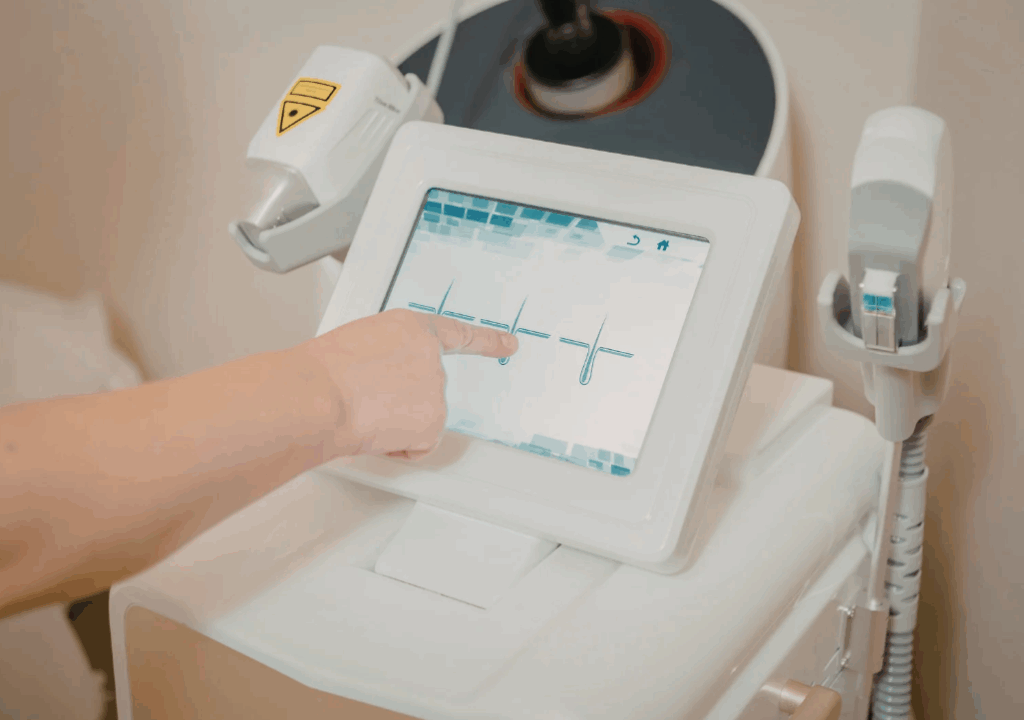
Here’s a look at some specific uses:
- Diagnostic Ultrasound: Creating detailed images of internal organs and tissues.
- Therapeutic Ultrasound: Focusing sound waves to break up kidney stones or treat certain conditions.
- Micro-manipulation: Guiding surgical instruments with extreme accuracy.
The non-invasive nature and high resolution offered by piezoelectric-based medical devices are transforming patient care, allowing for earlier detection and more targeted treatments.
Automotive Safety Systems
Piezoelectric actuators are quietly working behind the scenes in your car to keep you safe. They can be used in things like fuel injectors for more precise fuel delivery, which helps with both performance and emissions. They’re also finding their way into advanced driver-assistance systems (ADAS) for things like adaptive cruise control and parking sensors, where quick and accurate responses are needed.
Oceanographic Exploration Tools
Exploring the deep sea is a tough job, and piezoelectric actuators are helping us do it better. They’re used in underwater vehicles for precise maneuvering and in sonar systems for mapping the ocean floor. Because they can operate reliably in harsh, high-pressure environments, they’re well-suited for this kind of work. They can also be part of systems that harvest energy from ocean waves, which could power remote monitoring stations.
- Sonar and acoustic mapping
- Actuation for underwater robotics
- Energy harvesting for remote sensors
Advancements In Piezoelectric Technology
Piezoelectric technology isn’t standing still. Researchers are constantly pushing the envelope, finding new ways to make these materials smaller, more flexible, and smarter. It’s pretty exciting stuff, especially when you think about how it could change things for industries that rely on precise control and sensing, like ours.
Miniaturization Through Nanotechnology
One of the biggest leaps forward is happening at the nanoscale. By working with piezoelectric materials at the atomic and molecular level, we’re seeing devices shrink down dramatically. This isn’t just about making things smaller for the sake of it; it means we can pack more precision into tighter spaces. Think about how this could impact the design of spray nozzles, allowing for finer control over spray patterns or integration into much smaller machinery. These tiny piezoelectric components can achieve incredibly fine movements, measured in nanometers. This level of control is a game-changer for applications demanding extreme accuracy, like micro-dispensing or intricate surface treatments.
Flexible Materials For Wearable Devices
Another area seeing a lot of development is in flexible piezoelectric materials. Traditionally, piezoelectric ceramics are quite rigid. But new polymers and composite structures are being developed that can bend and stretch. This opens up possibilities for devices that can conform to different shapes or even be integrated into clothing. While wearable tech might seem far removed from industrial spray nozzles, the underlying material science is relevant. It points towards a future where piezoelectric elements could be integrated into more adaptable systems, perhaps even sensors that can monitor conditions on flexible surfaces or within dynamic environments. Imagine a sensor that can flex and bend to monitor spray distribution on a curved object.
Integration With Artificial Intelligence
Perhaps the most forward-looking advancement is the marriage of piezoelectric technology with artificial intelligence (AI) and machine learning. Piezoelectric sensors generate a lot of data – think about vibrations, pressure changes, or tiny movements. AI algorithms can analyze this data in real-time to identify patterns, predict outcomes, or even adjust system behavior automatically. For example, an AI could monitor the vibration signature of a pump driving a spray system and predict when maintenance might be needed, or it could fine-tune the actuator controlling a nozzle based on real-time feedback about the spray quality. This intelligent feedback loop could lead to more efficient operations and better product consistency. We’re seeing this trend in areas like precision positioning where AI can optimize actuator movements for complex tasks.
Quantifying Performance
When we talk about piezoelectric actuators, understanding how well they perform is key. It’s not just about whether they move; it’s about how much, how precisely, and how efficiently they do it. This involves looking at a few core metrics that tell us about the material’s response to electrical and mechanical inputs.
Charge Generation Versus Applied Force
The most direct way to see the piezoelectric effect in action is by measuring the electrical charge produced when a force is applied. This relationship is pretty straightforward. The more force you apply, the more charge you get out. This is often described by the piezoelectric coefficient, usually denoted by ‘d’. Think of it like this: a higher ‘d’ means the material is more sensitive to force, generating more electrical charge for the same amount of push.
This is important for applications where you need to sense force or pressure. For instance, in a system that needs to detect subtle changes in load, a material with a high charge generation capability would be ideal. It’s a direct conversion of mechanical energy into electrical energy.
Stress Induced By Electric Fields
Piezoelectric actuators work both ways, remember? Not only does force create charge, but applying an electric field can also cause the material to deform, creating stress. This is the principle behind how these actuators actually move. The electric field essentially pushes and pulls on the charged particles within the material’s crystal structure, causing it to expand or contract.
The amount of stress generated depends on the material’s properties and the strength of the electric field applied. This is where the design of the actuator really comes into play. We want to maximize this stress to get the most mechanical motion possible for a given electrical input. For precise positioning tasks, like those needed in advanced manufacturing or optical alignment, this controlled deformation is everything. It’s how we achieve that fine-tuned movement.
The Significance Of The Piezoelectric Coefficient
The piezoelectric coefficient is a number that really sums up a material’s piezoelectric performance. There are actually a couple of different coefficients, but the most common ones relate charge to force (d) and voltage to stress (g). For actuators, we’re often most interested in the ‘d’ coefficient because it tells us how much displacement we can expect from a given electrical input, or how much charge is generated by an applied force.
Let’s look at a simplified relationship:
- Charge (Q) = Piezoelectric Coefficient (d) × Applied Force (F)
This equation shows that a larger ‘d’ value means more charge (Q) is produced for the same force (F). Similarly, for actuators, the displacement (ΔL) is related to the applied electric field (E) and the piezoelectric coefficient:
- Displacement (ΔL) ∝ d × E
So, a higher ‘d’ coefficient generally leads to greater displacement. When selecting materials for specific tasks, like ensuring consistent spray patterns with a flat spray nozzle, understanding these coefficients helps engineers pick the right stuff. It’s the number that tells you how responsive the material will be.
The performance of piezoelectric materials isn’t static; it can be influenced by temperature, frequency, and even the way the material is manufactured. These factors need to be considered for reliable operation in real-world conditions.
Looking Ahead
So, we’ve talked a lot about how piezoelectric stuff works and where it’s used. It’s pretty neat how a little bit of pressure can make electricity, or how electricity can make something move just right. We’re seeing it in everything from medical gear to cars, and even in exploring the deep ocean. The cool part is that people are still figuring out new ways to use this technology. Think about flexible sensors you can wear, or smarter systems that learn from data. Plus, making these devices smaller and more efficient is a big focus. It really feels like piezoelectric technology is going to keep showing up in new and surprising places, changing how we build and interact with the world around us.
Frequently Asked Questions
What exactly is the piezoelectric effect?
Imagine squeezing a special kind of crystal. When you push or pull it, it creates a tiny bit of electricity! That’s the piezoelectric effect. It’s like the material has a secret way of turning physical pressure into electrical energy. It works the other way too – if you apply electricity, the crystal will slightly change shape.
What are these special materials made of?
These amazing materials are usually crystals or ceramics with a specific internal structure. Think of them like tiny building blocks arranged in a way that’s not perfectly balanced. Common examples include quartz, which you might find in watches, and a man-made material called PZT. There are also flexible plastic-like materials that can do this trick.
How do piezoelectric actuators work?
Piezoelectric actuators are like tiny, super-precise muscles. They use those special piezoelectric materials. When you send an electrical signal to them, the material changes shape just a tiny bit. By stacking many of these materials or designing them in clever ways, they can move things with incredible accuracy, much finer than you could do with your hand.
Where are these actuators used?
They’re used in lots of cool places! Think about cameras that focus automatically, or microscopes that need to move samples with extreme precision. They’re also vital in medical equipment, like the devices that create ultrasound images to see inside your body. Even in cars, they help with safety systems.
Are there new kinds of piezoelectric technology being developed?
Yes! Scientists are making these materials even smaller using nanotechnology, which means even more precise devices. They’re also creating flexible versions that could be used in smart clothing or devices that bend and move with you. Plus, they’re starting to combine them with artificial intelligence to make them smarter.
How do we measure how good a piezoelectric material is?
We use something called the piezoelectric coefficient. It’s basically a number that tells you how much electricity you get for a certain amount of force, or how much it bends when you apply a voltage. A higher number usually means the material is more effective at converting energy between its electrical and mechanical forms.