The Core Principle of Piezoelectricity
At the heart of PZT bimorph actuators and sensors lies the piezoelectric effect. It’s a fascinating property of certain ceramic materials, like Lead Zirconate Titanate (PZT), that lets them do two main things. First, when you apply mechanical stress – like squeezing or bending them – they generate an electrical charge. This is called the direct piezoelectric effect. Think of it like a tiny generator powered by physical force.
On the flip side, the inverse piezoelectric effect means that if you apply an electric field across the material, it will physically deform, changing its shape. This deformation can be an expansion, contraction, or bending, depending on how the material is structured and how the voltage is applied. This ability to convert electrical energy into precise mechanical motion is what makes PZT bimorphs so useful as actuators.

Here’s a simple way to look at it:
- Direct Effect: Mechanical Stress → Electrical Charge
- Inverse Effect: Electrical Field → Mechanical Strain (Shape Change)
Structure and Composition of Bimorphs
A PZT bimorph isn’t just a single piece of PZT. It’s typically made of two thin layers of piezoelectric material, often PZT ceramic, bonded together. These two layers are usually polarized in opposite directions. When a voltage is applied across these layers, one layer might expand while the other contracts. Because they’re stuck together, this differential expansion and contraction forces the entire bimorph structure to bend. The amount and direction of bending can be controlled by the polarity and magnitude of the applied voltage.
The specific composition of the PZT material itself can be tweaked by adjusting the ratios of lead, zirconium, and titanium. This allows manufacturers to fine-tune properties like:
- Piezoelectric Coefficients: How much charge is generated or how much it deforms per unit of stress or electric field. Higher coefficients mean more output.
- Curie Temperature: The maximum temperature the material can withstand before losing its piezoelectric properties. This is important for operating environments.
- Dielectric Constant: How well the material stores electrical energy, affecting its response time and impedance.
Key Types of PZT Bimorph Actuators
While the basic concept of two bonded piezoelectric layers is common, PZT bimorphs come in a few variations, each suited for different jobs:
- Standard Bimorphs: These are the most common type, featuring two active piezoelectric layers. They offer a good balance of displacement and force.
- Unimorphs: In contrast, a unimorph has only one active piezoelectric layer bonded to a passive substrate (like brass or stainless steel). The passive layer doesn’t generate a charge but contributes to the bending. They are often simpler and cheaper but may have less displacement than a bimorph.
- Stacked or Multilayer Bimorphs: For applications needing greater force or displacement, multiple bimorph elements can be stacked or integrated into a multilayer structure. This increases the overall stroke or force output.
The precise way these layers are manufactured, polarized, and bonded together significantly impacts the actuator’s performance. Factors like layer thickness, electrode placement, and the bonding adhesive all play a role in how effectively the bimorph bends and how long it lasts.
The Mechanics of PZT Bimorph Actuation
Piezoelectric Effect in Bimorph Operation
PZT bimorph actuators work because of a neat property called the piezoelectric effect. Basically, certain materials, like PZT (lead zirconate titanate), do two things: they create an electric charge when you squeeze or bend them, and they change shape when you apply an electric field. For a bimorph, we use the second part. It’s made of two layers of this piezoelectric material stuck together. When you send electricity to it, one layer tries to get a little bigger, and the other tries to get a little smaller. Since they’re glued together, this difference in expansion and contraction forces the whole thing to bend. This bending is the key to how it acts as an actuator. It’s like a tiny, controlled muscle that can move things.
Voltage Control and Resulting Bending Motion
The amount the PZT bimorph bends is directly related to the voltage you apply. A little voltage means a little bend, and more voltage means more bend. This makes them really good for precise movements. You can control the direction and amount of bending just by changing the voltage. This is super useful for things like fine-tuning the position of a nozzle tip or controlling the flow of fluids in a very specific way. The response is also really fast, so you can make it bend and unbend very quickly.
Here’s a quick look at how voltage affects bending:
| Applied Voltage (V) | Resulting Bending |
| 0 | No bend |
| Low | Slight curve |
| Medium | Moderate curve |
| High | Significant curve |
The controlled bending of a PZT bimorph is a direct consequence of the inverse piezoelectric effect acting on two bonded layers with opposing polarization or material properties. This differential strain is what generates the macroscopic flexural motion, allowing for precise mechanical actuation.
Think about it for spray nozzles: you could use this bending to adjust the angle of the spray, control the droplet size by slightly deforming the nozzle orifice, or even create pulsed sprays by rapidly bending and unbending the actuator. It’s all about using that electrical input to get a very specific mechanical output, which is exactly what you need for advanced spray control.
PZT Bimorphs in Precision Motion Control
When you need really fine, controlled movement, PZT bimorphs are a go-to. They’re not just for big, clunky machines; they excel at the small stuff where accuracy is everything. Think about applications where a tiny adjustment can make a huge difference, like in high-tech manufacturing or delicate scientific instruments. The way they work is pretty neat – apply a voltage, and they bend. It’s a direct, predictable response that makes them super useful.
Micro-Positioning Systems
In systems that require positioning things down to the micron or even nanometer level, PZT bimorphs are a solid choice. They can move components with incredible precision, far beyond what traditional motors can manage. This is vital for things like aligning optical fibers in telecommunications or positioning samples under a microscope. The control is so fine that you can make adjustments that are almost imperceptible to the naked eye.
- High Resolution: Capable of movements in the nanometer range.
- Fast Response: React quickly to changes in voltage.
- Compact Size: Fit into small spaces where other actuators can’t.
- Low Power Consumption: Efficient for continuous operation.
Fluid Control and Atomization Applications
For industries that deal with fluids, especially at a small scale, Piezo bimorphs offer a way to control flow with great accuracy. They can be used to create tiny pumps or valves that dispense precise amounts of liquid. This is particularly important in areas like medical diagnostics, where exact dosing is critical, or in creating fine mists for atomization. Imagine a spray nozzle that can adjust its droplet size on the fly – that’s the kind of precision we’re talking about.
The ability of PZT bimorphs to generate controlled, small-scale movements makes them ideal for applications requiring precise fluid handling and atomization, where even minor variations can impact product quality or experimental results.
Generating Precise Mechanical Motion
At their heart, PZT bimorphs are about generating controlled mechanical motion. When you apply an electrical signal, the piezoelectric layers within the bimorph expand or contract differently, causing the entire unit to bend. This bending motion can be used to push, pull, or position other components. The amount of bending is directly related to the voltage applied, giving you a straightforward way to control the movement. This makes them perfect for tasks that need repeatable, accurate mechanical actions.
| Application Type | Typical Motion Range | Control Method | Key Benefit |
| Micro-positioning | 10-100 µm | Voltage | High accuracy, repeatable positioning |
| Fluid Dispensing | < 1 µL per cycle | Pulse Width | Precise volume control, low pulsation |
| Vibration Dampening | Variable | Feedback Loop | Active reduction of unwanted vibrations |
| Optical Alignment | 5-50 µm | Voltage | Fine adjustment of optical paths |
PZT Bimorphs in Advanced Optical Systems
PZT bimorph actuators are really useful when you need to make tiny, precise adjustments to optical components. Think about systems where even a microscopic shift can mess things up – that’s where these actuators come in handy. They’re not just for big movements; their strength is in the fine-tuning.
Laser Beam Steering
Adjusting the path of a laser beam needs to be super accurate, especially in industrial settings or scientific research. PZT bimorphs can bend just enough to change a laser’s direction with incredible precision. This means you can point a laser exactly where it needs to go, whether it’s for marking materials, aligning components, or in complex measurement setups. The controlled bending allows for rapid and repeatable adjustments to the beam’s trajectory.
Optical Fiber Alignment
Getting light from one fiber optic cable to another, or into a detector, can be tricky. If the fibers aren’t lined up perfectly, you lose signal strength. PZT bimorphs can gently nudge the fiber ends into the perfect position. This fine control is vital for telecommunications, data transmission, and any system relying on optical fibers to carry information. It helps reduce signal loss and keeps your data flowing smoothly.
Adaptive Optics
Sometimes, the path of light gets distorted, like when it passes through the atmosphere or imperfect lenses. Adaptive optics systems use PZT bimorphs to correct these distortions. They can change the shape of a mirror or lens very quickly, smoothing out the light path. This is important for things like high-powered lasers used in manufacturing or advanced imaging systems where a clear, undistorted view is a must. It’s like having a tiny, fast-acting corrector for light.
Here’s a look at how PZT bimorphs contribute to these optical tasks:
| Application | Primary Function | Key PZT Bimorph Action | Resulting Benefit |
| Laser Beam Steering | Directional Control | Precise Bending | Accurate targeting, repeatable adjustments |
| Optical Fiber Align. | Positioning | Micro-adjustments | Reduced signal loss, improved transmission |
| Adaptive Optics | Distortion Correction | Shape Modification | Clearer images, improved beam quality |
The ability of PZT bimorphs to translate electrical signals into controlled mechanical motion, specifically bending, makes them uniquely suited for the delicate and precise adjustments required in advanced optical systems. Their small size and fast response times are also significant advantages.
PZT Bimorphs in Robotics and Automation
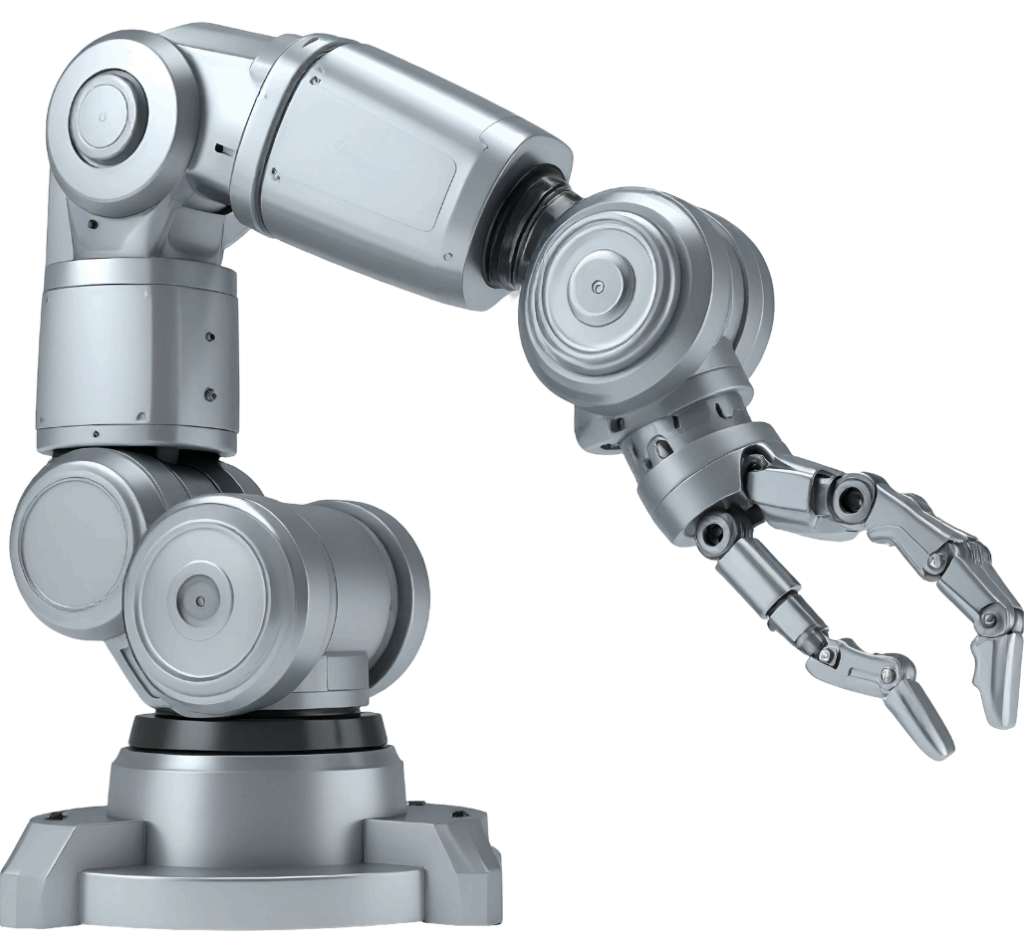
When we talk about robotics and automation, precision is everything. You can’t just have a robot arm flailing around; it needs to do things with accuracy, especially when dealing with delicate parts or complex assembly. This is where PZT bimorphs really shine.
Precision Grippers for Delicate Handling
Think about picking up a tiny electronic component or a fragile piece of medical equipment. A standard gripper might be too rough. PZT bimorphs allow for the creation of precision grippers that can apply just the right amount of force. They can be controlled to open and close with incredibly fine adjustments, making sure that even the most delicate items aren’t damaged. This is a big deal in manufacturing lines where consistency and care are paramount. Imagine needing to place a tiny nozzle onto a spray head assembly; a bimorph gripper could handle that task with ease, ensuring perfect alignment and no stress on the component. The ability to control the force applied by these grippers is vital in industries like electronics manufacturing and pharmaceuticals.
Micro-Robotics and Miniature Devices
Beyond just grippers, PZT bimorphs are enabling the development of micro-robots. These tiny machines can get into places that are hard or impossible for humans to reach. We’re talking about applications in inspecting tight spaces within machinery, or even in medical procedures for targeted delivery. The small size and precise movement capabilities of bimorphs make them perfect for building these miniature marvels. They can generate controlled vibrations and manipulate precise movements, which is key for these small-scale robots to perform their tasks effectively.
Robotic Arm Control
Robotic arms themselves benefit greatly from PZT bimorph technology. By incorporating bimorph actuators, robotic arms can achieve finer movements and more controlled articulation. This is especially important for tasks that require high accuracy, like intricate assembly processes or delicate surgical procedures. The ability to make these subtle adjustments means robots can perform tasks that were previously only possible with human dexterity. For example, in automated assembly of spray nozzles, precise positioning is needed to ensure proper sealing and function, something bimorphs can help achieve.
The controlled bending motion of PZT bimorphs translates directly into the fine motor skills required for advanced automation. This allows machines to perform tasks with a level of precision that was once only achievable by human hands.
Here’s a quick look at how PZT bimorphs contribute:
- Fine Force Control: Essential for handling delicate objects without damage.
- Precise Positioning: Allows for accurate placement and alignment in assembly.
- Miniaturization: Enables the creation of smaller, more agile robotic systems.
- Vibration Dampening: Can be used to stabilize moving parts, improving overall system performance.
PZT Bimorphs in Medical and Healthcare
Ultrasound Imaging and Diagnostics
PZT bimorphs are really at the core of ultrasound technology. They’re the bits that create the sound waves that bounce off what’s inside you, and then they pick up the echoes to make an image. It’s pretty neat how they can change electrical signals into sound and back again. Doctors use different frequencies for different things. Higher frequencies give you a really clear look at shallow stuff, like skin or muscles. Lower frequencies can go deeper, which is what you need to see organs. There’s also Doppler ultrasound, which uses the sound waves to actually measure blood flow. This whole process is non-invasive, meaning no cutting, and it doesn’t use radiation, so it’s safe for pretty much everyone, including pregnant folks. The precision these PZT components offer is a big reason why ultrasound is so common for everything from checking on a baby to looking at heart problems.

Drug Delivery Systems
Getting medicine exactly where it needs to go in the body, and at the right time, is a big challenge. PZT bimorphs are helping to solve this. Think about nebulizers – those devices that turn liquid medicine into a fine mist you can breathe in. PZT atomizers are often used in those. They vibrate really fast to break the liquid down. Beyond that, tiny pumps driven by PZT can deliver super precise doses of medication. This is useful for targeted treatments. There’s also a technique called sonoporation, where ultrasound can temporarily make cell walls a bit more open, letting drugs get inside cells more easily. It’s all about making treatments more effective and less invasive.
Powering Implantable Devices
More and more, we’re seeing smart devices being put inside the body for treatment or monitoring. A common problem is that these devices need batteries, and changing those batteries often means another surgery. PZT bimorphs offer a cool way around this. They can actually generate their own power from the body’s movements or vibrations. This means implantable devices could potentially run for a very long time without needing battery replacements. It’s a big step towards making these internal medical tools more practical and less burdensome for patients.
PZT Bimorphs in Aerospace and Defense
Missile Guidance Systems
PZT bimorphs are pretty important for keeping missiles on track. They help make tiny, precise adjustments to the fins, which is key for hitting targets way out there. It’s all about that direct piezoelectric effect – turning physical forces into electrical signals so the missile knows exactly where to go. This kind of accuracy is non-negotiable when you’re talking about defense systems.
Satellite Positioning and Stabilization
Keeping a satellite pointed in the right direction is a big job, and PZT bimorphs help out. They can make small adjustments to a satellite’s orientation, making sure it stays stable and in its correct spot. This technology also helps in gathering data about materials in space, which is useful for keeping an eye on the satellite’s health.
Optical Component Control in Space
Harsh space conditions don’t make things easy for delicate optical equipment. PZT bimorphs are used to control things like laser beams and adaptive optics. They allow for really fine-tuned adjustments, which means optical systems can keep working properly even when things get rough up there. This precise control is vital for maintaining clear communication and accurate data collection from space.
The reliability and precision offered by PZT bimorphs make them a go-to choice for applications where failure is not an option. Their ability to perform under extreme conditions is a significant advantage in both aerospace and defense sectors.
Here’s a quick look at some key applications:
- Missile Guidance: Fine-tuning flight paths for accuracy.
- Satellite Stabilization: Maintaining orientation and position.
- Optical Systems: Precise control of lasers and adaptive optics.
Future Directions for PZT Bimorph Technology
The world of PZT bimorphs is always moving forward. We’re seeing some really interesting developments that are going to make these components even more useful in the future. It’s not just about making them smaller or stronger, but also about making them smarter and more sustainable.
Emerging Materials and Enhanced Performance
Right now, a lot of PZT materials have lead in them, which isn’t great for the environment. So, scientists are working hard to find new materials that work just as well but don’t have lead. Think about things like bismuth sodium titanate or potassium sodium niobate. The goal is to get the same great piezoelectric properties without the environmental worries. This is a big deal, especially as regulations get tighter. We’re looking at a future where high-performance piezoelectric components are also eco-friendly.
Integration with Artificial Intelligence
This is where things get really exciting. Imagine PZT bimorphs that can learn and adapt on the fly. By connecting them with AI, we can create systems that are much more precise and responsive. For example, an AI could help a spray nozzle adjust its spray pattern in real-time based on environmental conditions, making sure you get the perfect coverage every time. This kind of smart control could really change how we use these devices in industries like food processing or chemical application. It’s about making them work better with less human input.
Sustainability and Efficiency Improvements
Beyond just lead-free materials, there’s a push to make the whole manufacturing process more sustainable. This means using less energy and creating less waste. We’re also looking at ways to make PZT bimorphs last longer, so you don’t have to replace them as often. Think about how this could impact large-scale industrial operations; fewer replacements mean less downtime and lower costs. It’s all about making the technology more efficient and responsible for the long haul.
Wrapping Things Up
So, we’ve taken a look at PZT bimorph actuators and sensors, and it’s pretty clear they’re not just some niche tech. These things are showing up everywhere, from tiny robots to big satellites, and even in medical gear. Their ability to bend and flex with just a little bit of electricity, or to turn physical bumps and wiggles into electrical signals, makes them super handy. While there are definitely some tricky bits to figure out, like making sure they last a long time and are good for the planet, the work being done now is making them even better. It seems like PZT technology is going to keep finding new jobs and becoming a bigger part of our everyday tech. It’s a pretty neat area to watch as it grows.
Frequently Asked Questions
What exactly is a PZT bimorph actuator?
A piezoelectric bimorph actuator is a special kind of device made from two layers of a material called PZT. When you send electricity through it, one layer gets a bit bigger while the other gets a bit smaller. This difference makes the whole thing bend, sort of like a tiny diving board.
How does a PZT bimorph actuator actually work?
It works because of something called the piezoelectric effect. This means that when you apply electricity, the PZT material changes shape. In a bimorph, you have two layers working against each other – one pushing out, the other pulling in – which causes that bending motion. You can control how much it bends by changing the amount of electricity you use.
Where do you find these PZT bimorph actuators being used?
They’re used in a lot of different places! Think about super-precise machines that need to move tiny things, like in making computer chips or in delicate scientific tools. They’re also found in cameras to keep images steady, in medical devices for things like ultrasound, and even in robots for precise movements.
What are PZT bimorphs made of?
The most common material is called lead zirconate titanate, or PZT for short. It’s a type of ceramic that’s really good at this piezoelectric trick. It’s chosen because it works well and lasts a long time, but scientists are also looking into other materials to make them even better or more eco-friendly.
Why are PZT bimorphs so useful in things like cameras or microscopes?
Because they can move incredibly small distances with amazing accuracy. Imagine trying to focus a microscope on something super tiny, or keeping a camera perfectly still to avoid blurry pictures. PZT bimorphs can make these tiny, precise adjustments that are hard to achieve with regular motors.
Can these PZT devices be used to help people?
Yes, they can! In medicine, they are used in ultrasound machines to create images of what’s inside your body. They can also be part of tiny pumps that deliver medicine very precisely, or even help power small devices that are implanted inside you, so you don’t need as many battery changes.